Strategy Basics · 6 min read

Long-Term Investing vs Trading

Choose the style that matches your time, temperament, and decision process.

Long-Term Investing vs Trading

Investing and trading are not the same activity. Both can be valid, but they require different habits, expectations, and risk-management frameworks.

How long-term investing works

Long-term investors usually focus on business quality, valuation, and multi-year compounding. They care more about structural growth and less about every short-term price swing.

  • Multi-year horizon.
  • Business quality matters most.
  • Patience is central.
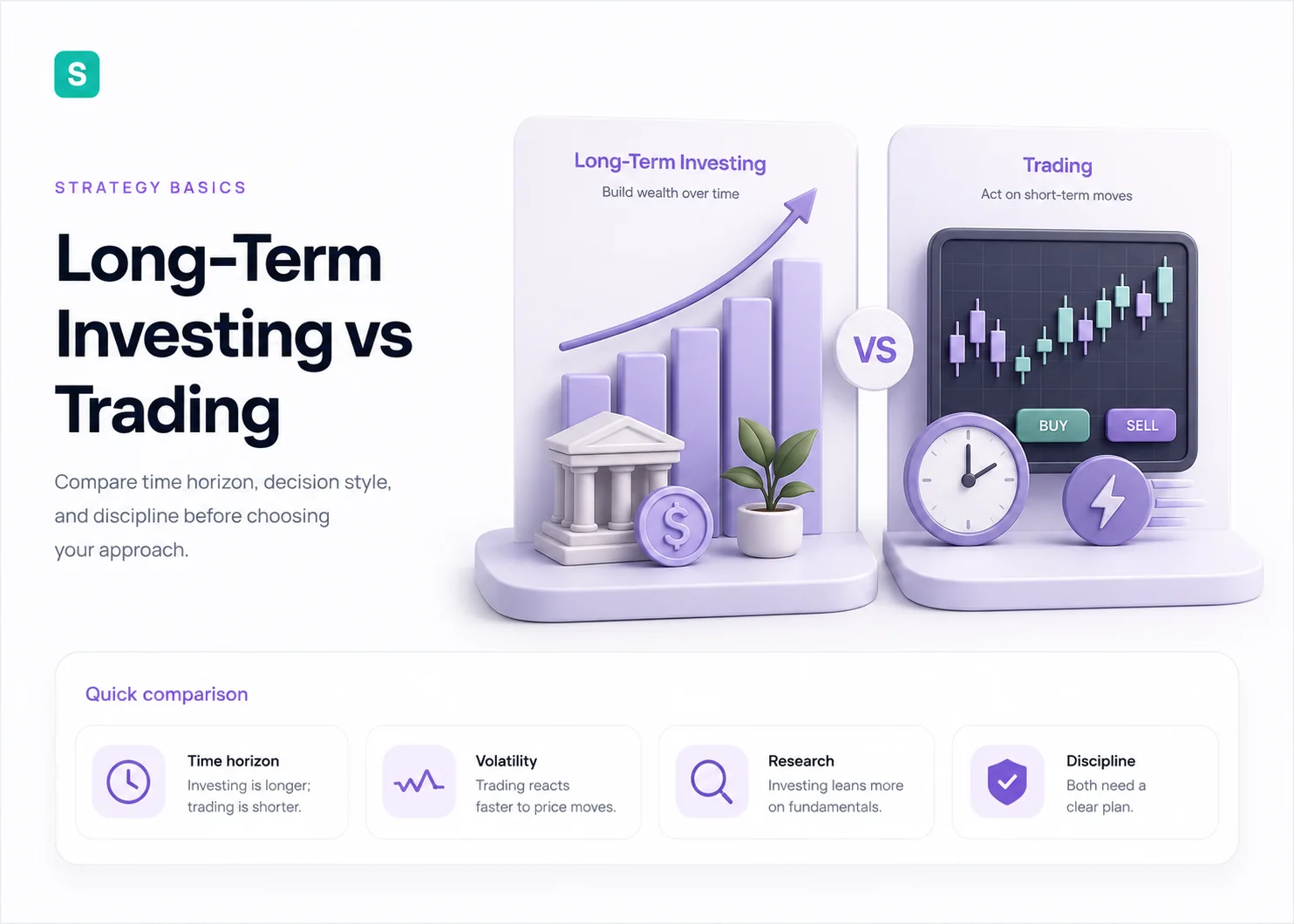
Side-by-side illustration comparing long-term investing growth and short-term trading charts
Investing and trading use different time horizons and decision rhythms; both require research and discipline.

How trading differs

Trading tends to focus more on timing, momentum, levels, catalysts, and shorter decision loops. The process is often faster, but it usually demands more active risk control and emotional discipline.

  • Shorter time horizon.
  • Timing matters more.
  • Execution discipline is critical.

How to choose between them

Your style should reflect the time you can commit, your ability to handle volatility, and whether you prefer deep research or fast execution. Many investors blend both styles, but they should know when they are switching modes.

  • Match style to your schedule.
  • Know your emotional tolerance.
  • Be clear about which mode you are using.

Put it into practice — explore Egyptian mutual funds or ask the AI analyst.

Frequently asked questions

What is the difference between investing and trading?
Investing means buying assets to hold for years, letting company growth and compounding build wealth. Trading means buying and selling frequently to profit from short-term price moves. They need different skills, time and risk tolerance.
Is long-term investing better than trading?
For most people, long-term investing is simpler, cheaper in fees and taxes, and less stressful, and it benefits from compounding. Active trading can work but demands more time, skill and discipline, and many traders underperform a patient buy-and-hold approach.
What is compounding?
Compounding is earning returns on your past returns as well as your original capital. Reinvesting gains and dividends over many years can grow a modest sum substantially, which is why starting early matters so much.
How long should I hold a stock?
There is no fixed rule, but long-term investors often hold quality companies for years, reviewing them as the business and their goals change rather than reacting to every price swing. Your time horizon should match why you invested.

Continue learning

All learn topics →