Technical Basics · 6 min read

Support and Resistance Basics

Learn the simple chart levels traders watch to frame entries, exits, and risk.

Support and Resistance Basics

Support and resistance are price zones where market behavior often changes. They help investors and traders understand where demand or supply may become more active.

What support means

Support is a zone where price has historically found buying interest. It does not guarantee a bounce, but it helps frame where buyers may start defending the price again.

  • Support is a zone, not a single magic line.
  • Past reactions matter.
  • Support can fail.
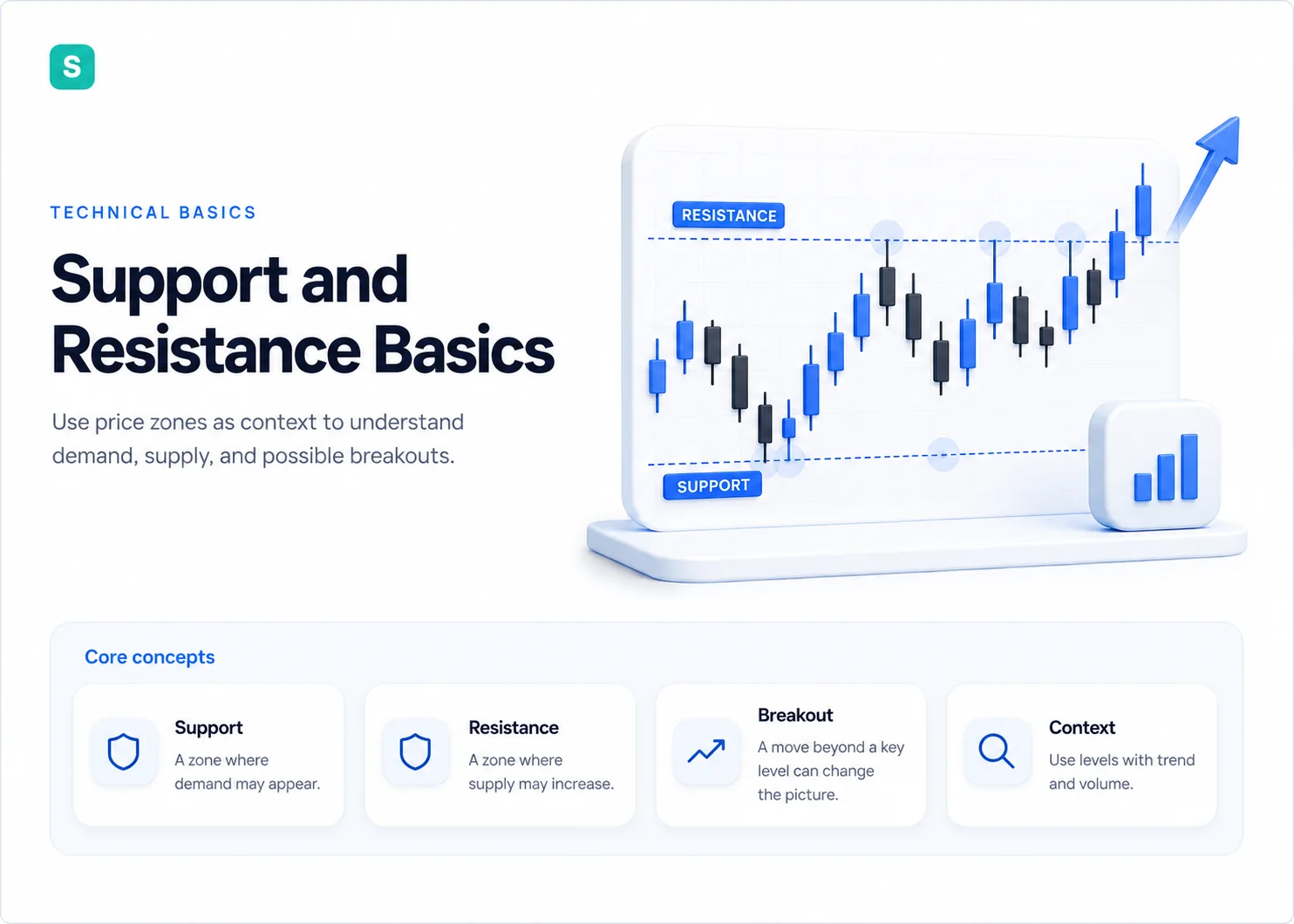
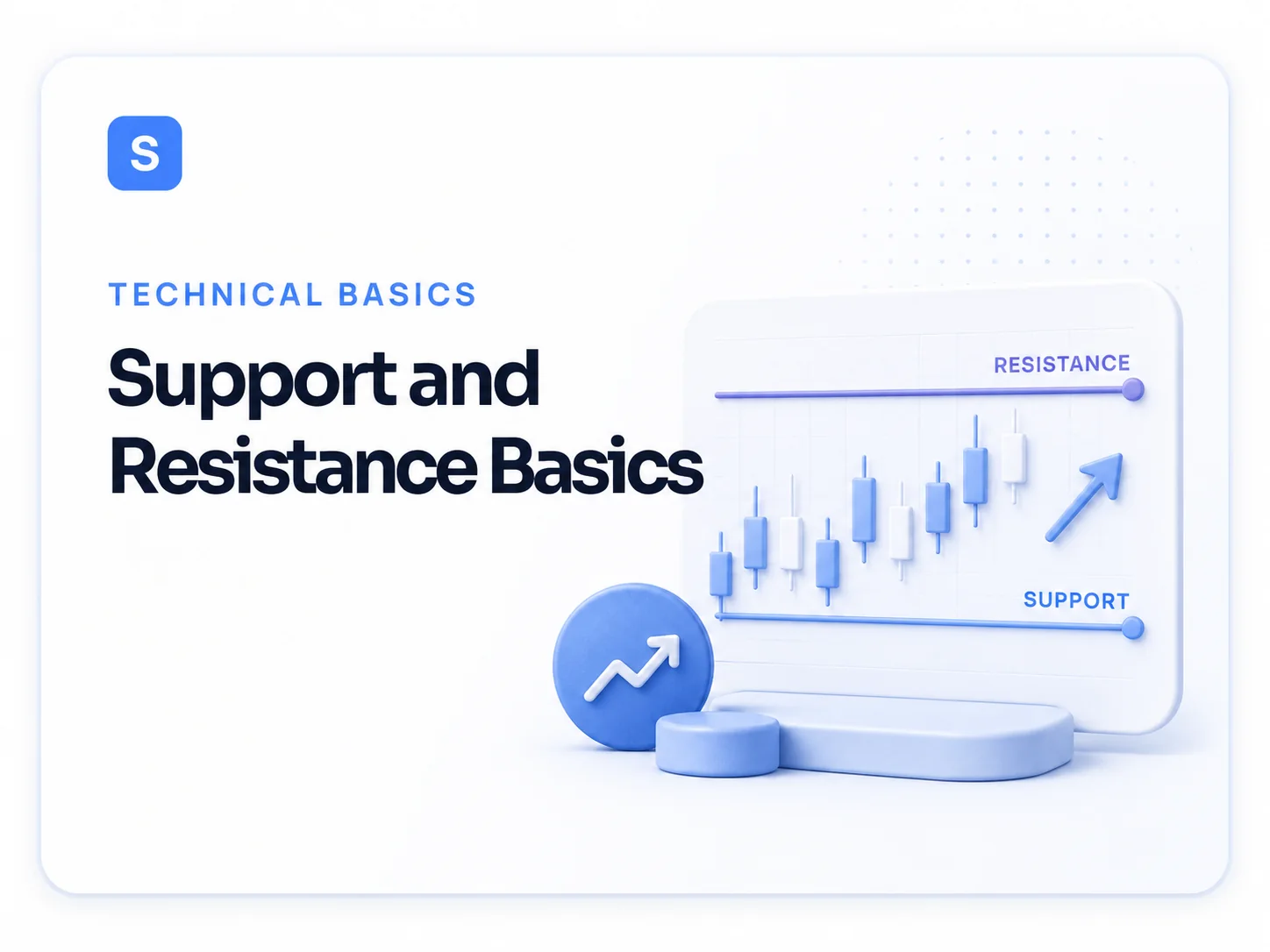
Candlestick chart marking support and resistance zones and a potential breakout
Support and resistance are context zones for demand and supply; a breakout can change the trading picture.

What resistance means

Resistance is the opposite idea. It is a zone where selling pressure has often appeared before. Traders use it to estimate where momentum may pause or reverse.

  • Resistance marks past selling pressure.
  • It can slow rallies.
  • Breakouts change the picture.

How beginners should use the concept

Use support and resistance as context rather than certainty. They are better when combined with trend, volume, and broader market conditions instead of being used alone.

  • Treat them as probability zones.
  • Combine them with trend and volume.
  • Use them for planning, not prediction alone.

Put it into practice — explore Egyptian mutual funds or ask the AI analyst.

Frequently asked questions

What are support and resistance?
Support is a price level where buying tends to be strong enough to stop a fall, and resistance is a level where selling tends to cap a rise. Traders watch these levels because prices often pause or reverse near them.
How do traders use support and resistance?
Many traders look to buy near support and sell near resistance, or wait for a clear break of a level to signal a new move. They are tools for framing risk, not guarantees of what the price will do next.
What happens when a price breaks resistance?
A convincing break above resistance can signal further upside, and old resistance sometimes becomes new support. But breaks can be false, so traders usually seek confirmation such as higher volume before acting.
Are support and resistance reliable?
They are useful guides, not certainties. Levels can hold, break, or reverse, and they work best combined with other analysis and sound risk management rather than used on their own.

Continue learning

All learn topics →