
Portfolio Basics · 5 min read
Diversification Made Simple
Learn why spreading exposure can reduce concentration risk without trying to predict every move.
Diversification means not letting one position, one sector, or one asset type dominate your whole outcome. It is a risk-management tool, not a guarantee of profit.
What diversification protects against
If one holding underperforms, diversification can reduce the damage to the overall portfolio. It helps avoid over-dependence on a single story, sector, or manager.
- Reduces single-position dependence.
- Helps smooth portfolio behavior.
- Can lower concentration risk.
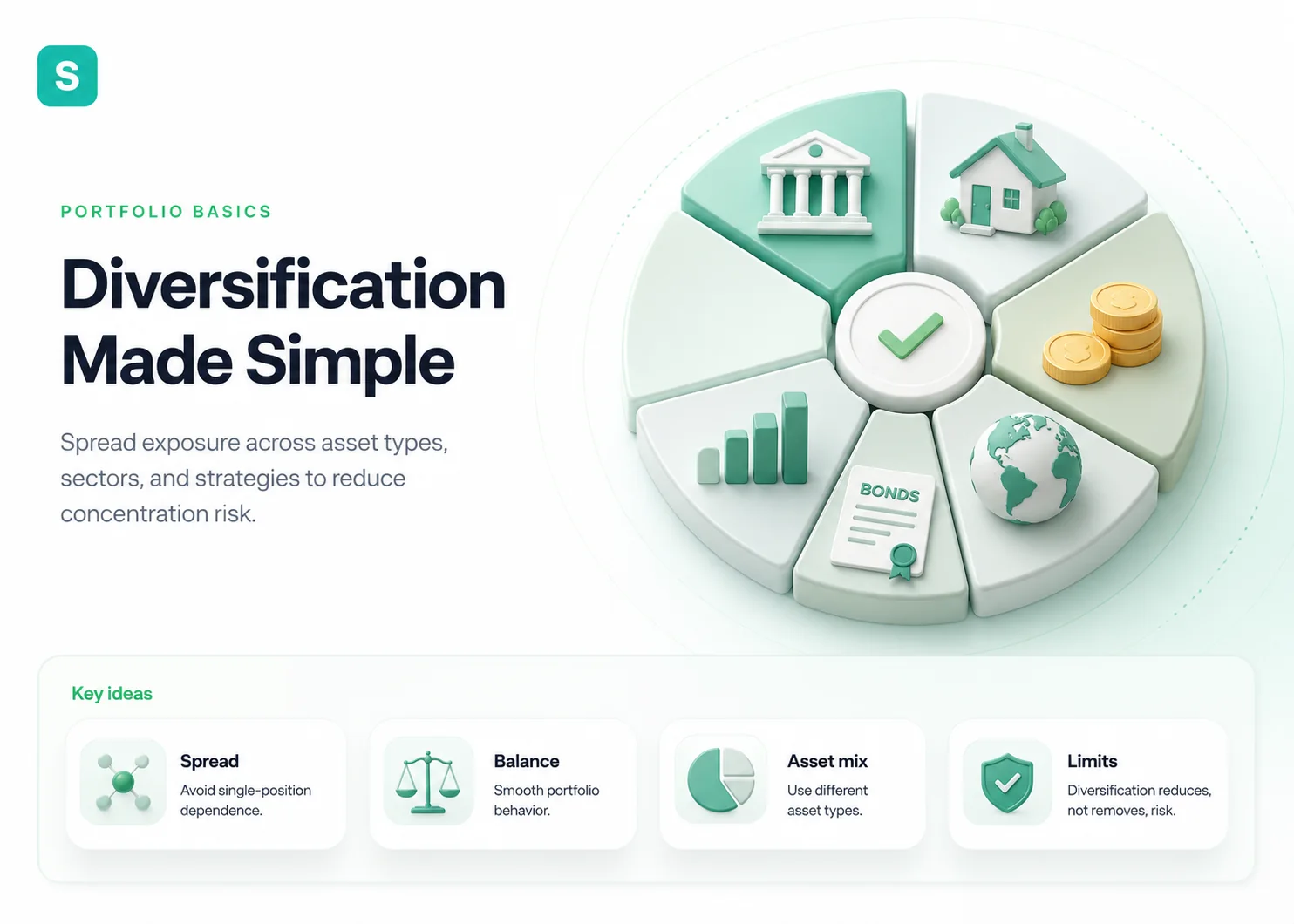
Different ways to diversify
You can diversify by sector, asset class, duration, strategy, geography, or manager style. Even within funds, it helps to understand whether many holdings are truly different or just look different on the surface.
- Sector diversification.
- Asset-class diversification.
- Manager-style diversification.
What diversification does not solve
Diversification cannot eliminate all market risk. In a broad market selloff, many assets may fall together. It improves resilience, but it does not replace discipline or asset selection.
- It is not full protection.
- Correlations can rise under stress.
- Discipline still matters.
Put it into practice — explore Egyptian mutual funds or compare funds side by side.