Fund Research · 6 min read
How to Read a Fund Factsheet
Turn a factsheet into a practical checklist instead of a confusing PDF.
A fund factsheet is a compact summary of what a fund is, how it behaves, and what an investor should know before investing. The goal is to read it as a decision document, not just a brochure.
Start with the mandate
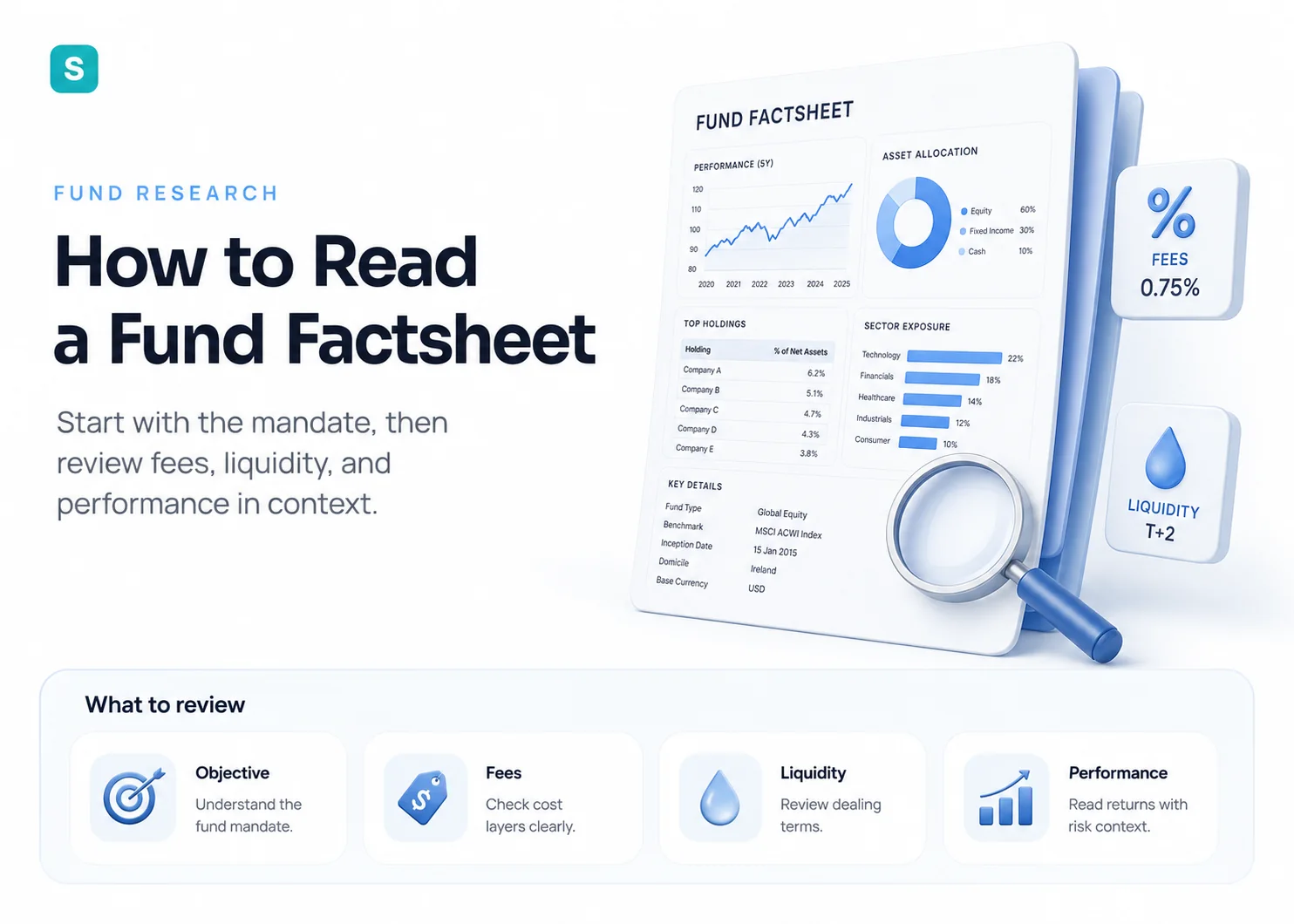
The first question is simple: what is this fund trying to do? The objective, asset class, benchmark, and investment policy tell you what kind of behavior to expect from the fund.
- Read the objective first.
- Check the asset class.
- Understand the policy and benchmark.
Move to fees and liquidity
A good factsheet explains the subscription and redemption framework, valuation frequency, and fee structure. These details affect how usable the fund is for your personal plan.
- Look for dealing frequency.
- Check fee layers clearly.
- Confirm subscription and redemption terms.
Finish with performance in context
Performance should be read alongside volatility, drawdowns, and the market environment. A return figure alone says little without knowing how much risk the fund took to achieve it.
- Use return with risk context.
- Read the timeframe carefully.
- Avoid one-number decisions.
Put it into practice — explore Egyptian mutual funds or compare funds side by side.