Risk Basics · 6 min read
Risk and Return for Beginners
See why higher return expectations usually come with wider price movement and more uncertainty.
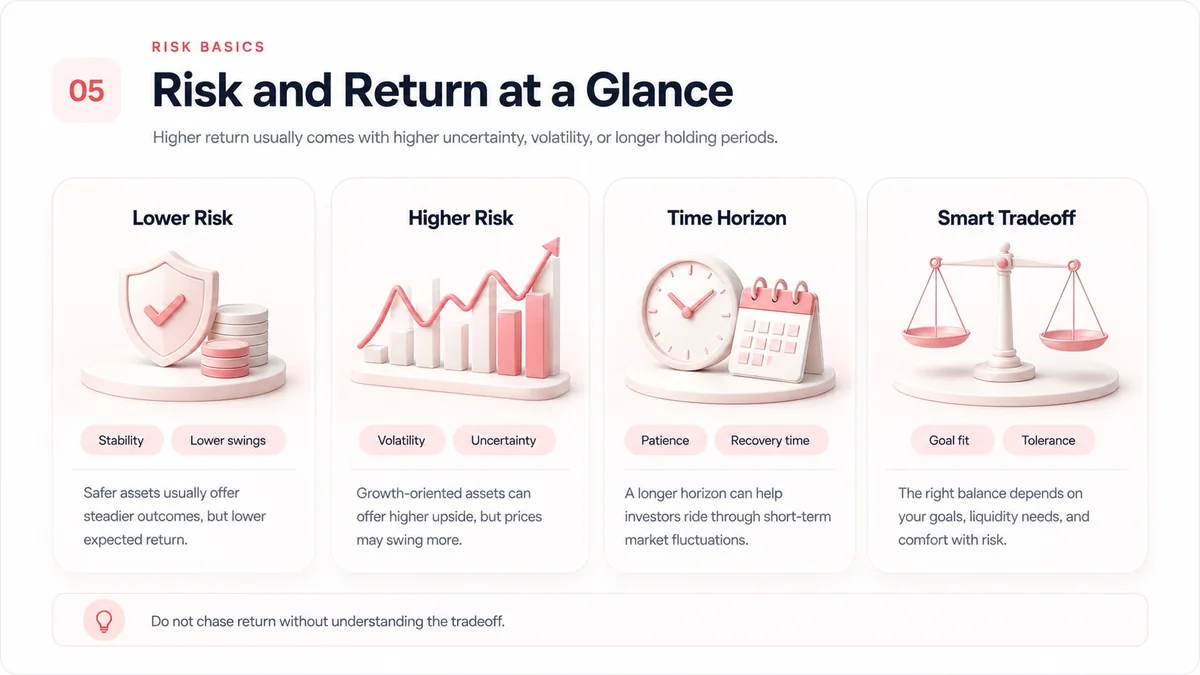
Risk and return are closely linked. In most cases, investors seek higher return by accepting more uncertainty, more volatility, or a longer time horizon.
What risk really means
Risk is not just the chance of loss. It also includes uncertainty around outcomes, the size of fluctuations, and how long it may take to recover from a drawdown.
- Volatility is one part of risk.
- Time matters when recovering losses.
- Liquidity can also be a risk factor.
Why return expectations differ
Safer assets usually offer lower expected return, while growth-oriented assets may offer better upside with more variability. The key is not to chase return without understanding the tradeoff.
- Lower risk often means lower expected return.
- Growth assets may swing more.
- Tradeoffs should match your plan.
How beginners should think about it
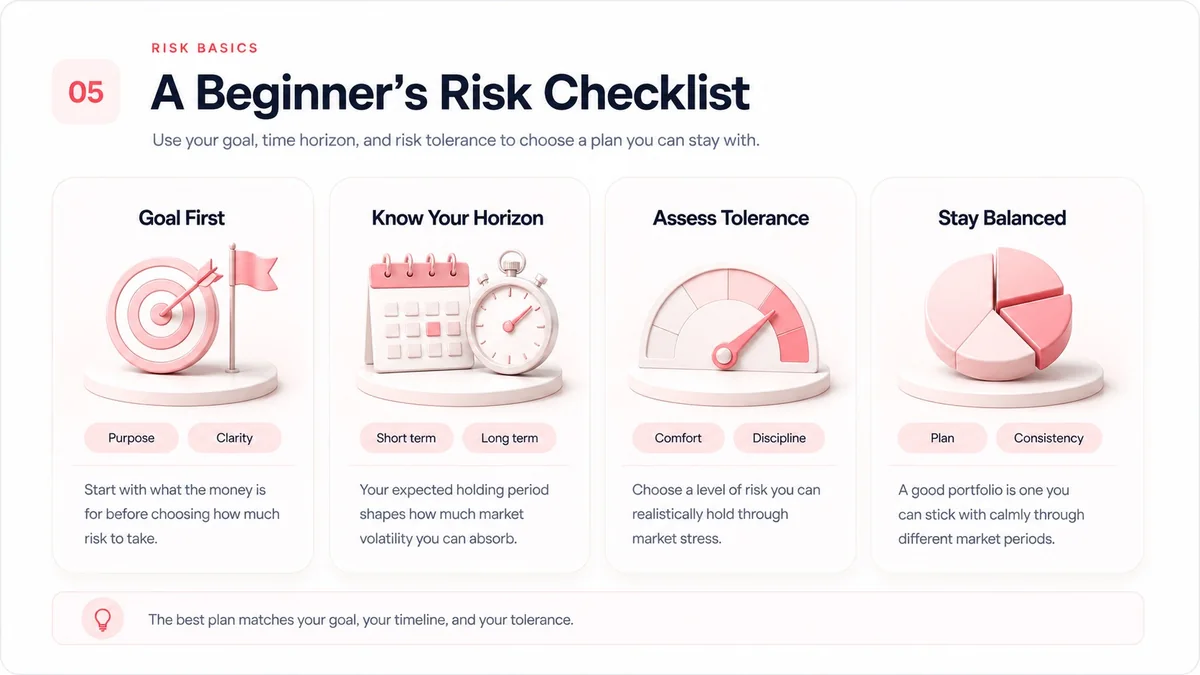
Start with your objective, liquidity needs, and comfort with temporary losses. A good allocation is one you can realistically hold through both calm and stressful market periods.
- Define your goal first.
- Know how much volatility you can handle.
- Build a plan you can stick with.
Put it into practice — explore Egyptian mutual funds or compare funds side by side.