See how a fund pools many investors into one professionally managed portfolio.
A mutual fund combines money from many investors, then invests that money according to a stated objective. Instead of choosing every security yourself, you buy units in one managed portfolio.
How pooling works
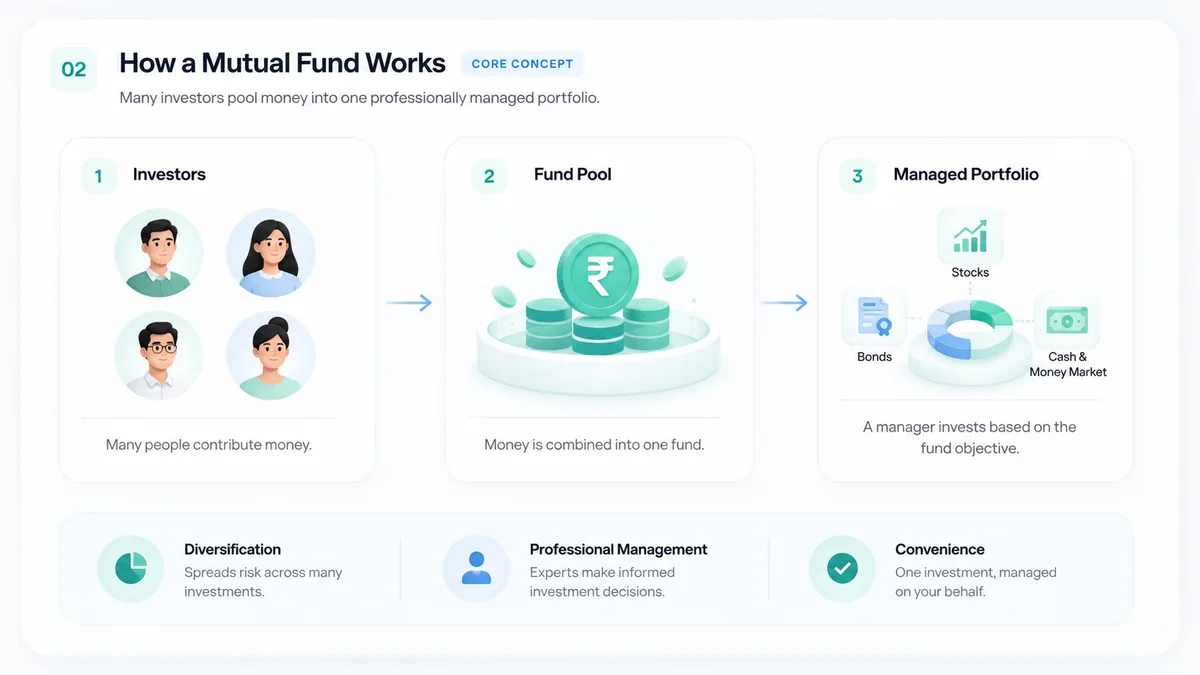
When investors subscribe to a fund, their money goes into one pool. The fund manager allocates that pool into stocks, bonds, deposits, or other instruments based on the fund mandate.
Many investors enter one pool.
One manager makes portfolio decisions.
The fund follows a clear investment mandate.
Many investors contribute to one pool, and that combined capital is then allocated into a professionally managed portfolio.
Why investors use funds
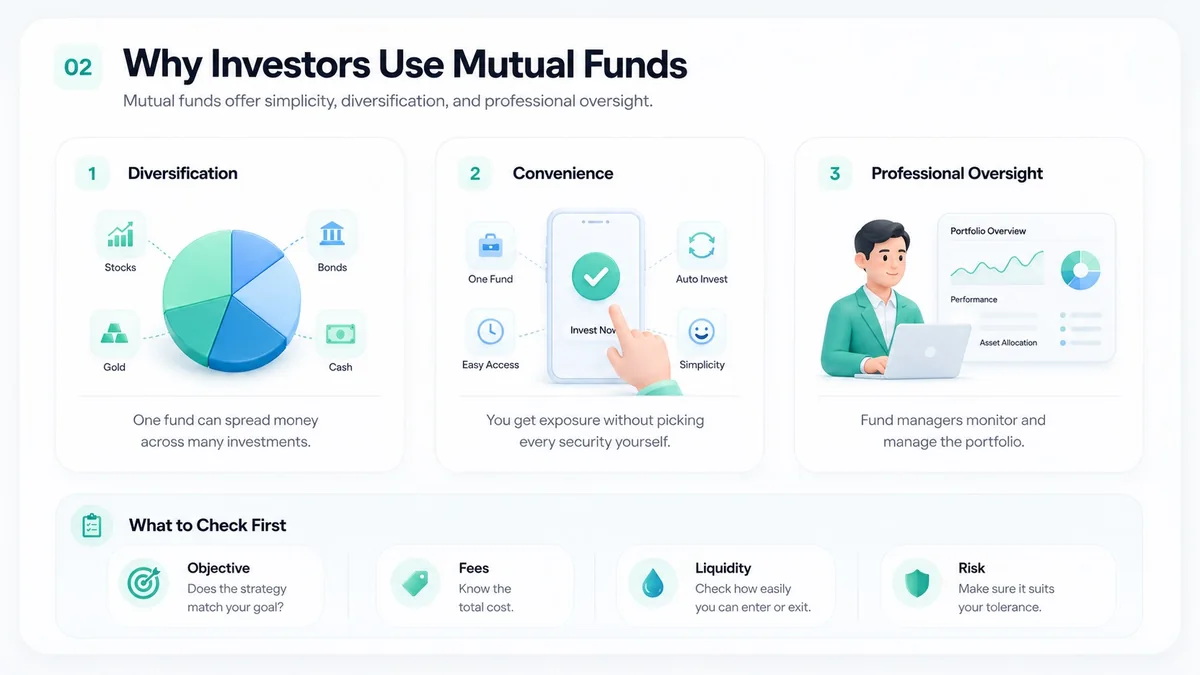
Funds can make diversification easier, reduce the need for daily portfolio management, and provide access to professional oversight. They are often useful for investors who want structure and convenience.
Simple diversification.
Professional management.
Convenient access to many assets.
A single fund can spread exposure across different assets while giving investors a simpler and more guided experience.
What to check first
Before investing, review the fund type, manager, fees, liquidity, historical behavior, and whether the objective fits your own time horizon and risk tolerance.
A mutual fund pools money from many investors and a professional manager invests it in a diversified portfolio of assets — such as stocks, bonds or money-market instruments — on their behalf. Each investor owns units representing a share of the whole portfolio.
How do mutual funds work in Egypt?
Egyptian mutual funds are usually launched by banks or asset managers and regulated by the FRA. You subscribe by buying units at the fund’s net asset value (NAV); the manager invests the pool, and you can redeem units back at the prevailing NAV.
Are mutual funds good for beginners?
They can be, because they offer instant diversification and professional management without needing to pick individual stocks. Still, funds carry risk and fees, and returns are not guaranteed, so match the fund’s strategy to your goals and risk tolerance.
What fees do mutual funds charge?
Most funds charge an annual management fee and may add subscription or redemption fees. These costs are taken from the fund and reduce your net return, so compare the total expense against a fund’s track record.