Mutual Funds · 5 min read

How NAV Works

Learn what net asset value means and why it matters when comparing funds.

How NAV Works

NAV, or net asset value, is the per-unit value of a fund after subtracting liabilities from assets. It is one of the core reference points for understanding fund pricing over time.

The basic formula

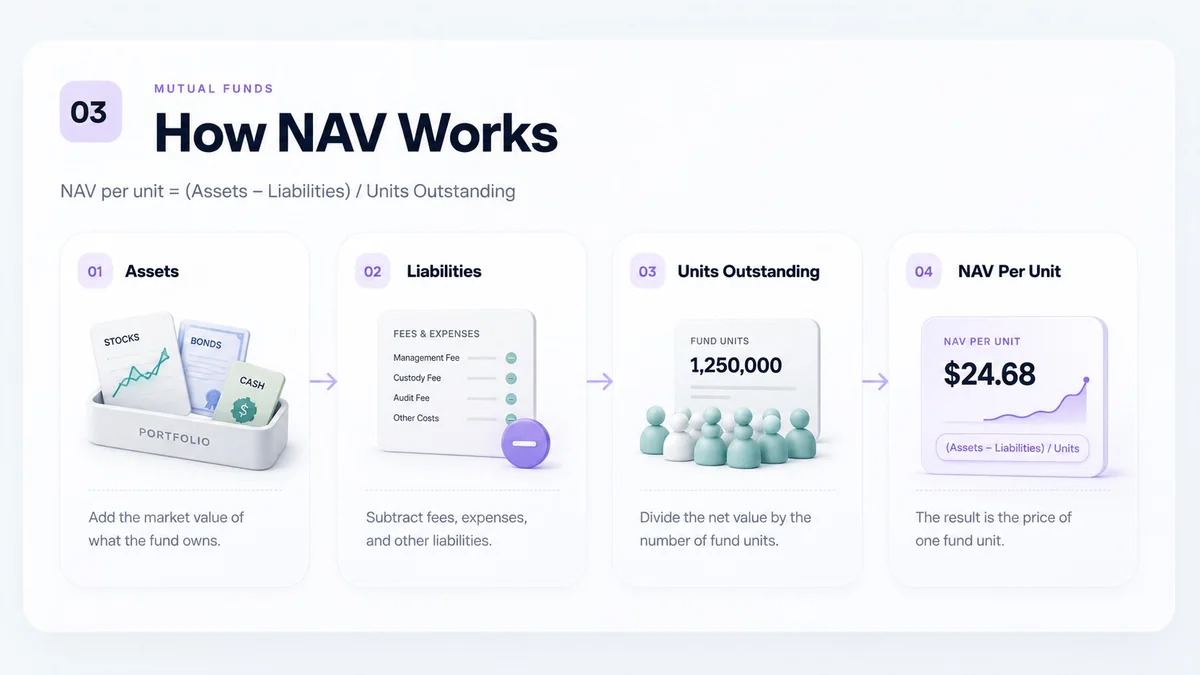
A fund adds up the market value of everything it owns, subtracts expenses or liabilities, then divides by the number of outstanding units. The result is the value per unit.

  • Assets minus liabilities.
  • Then divide by fund units.
  • The result is NAV per unit.
How NAV works by moving from assets and liabilities to outstanding units and a final per-unit value
NAV per unit comes from total assets minus liabilities, divided by the number of units outstanding.

Why NAV changes

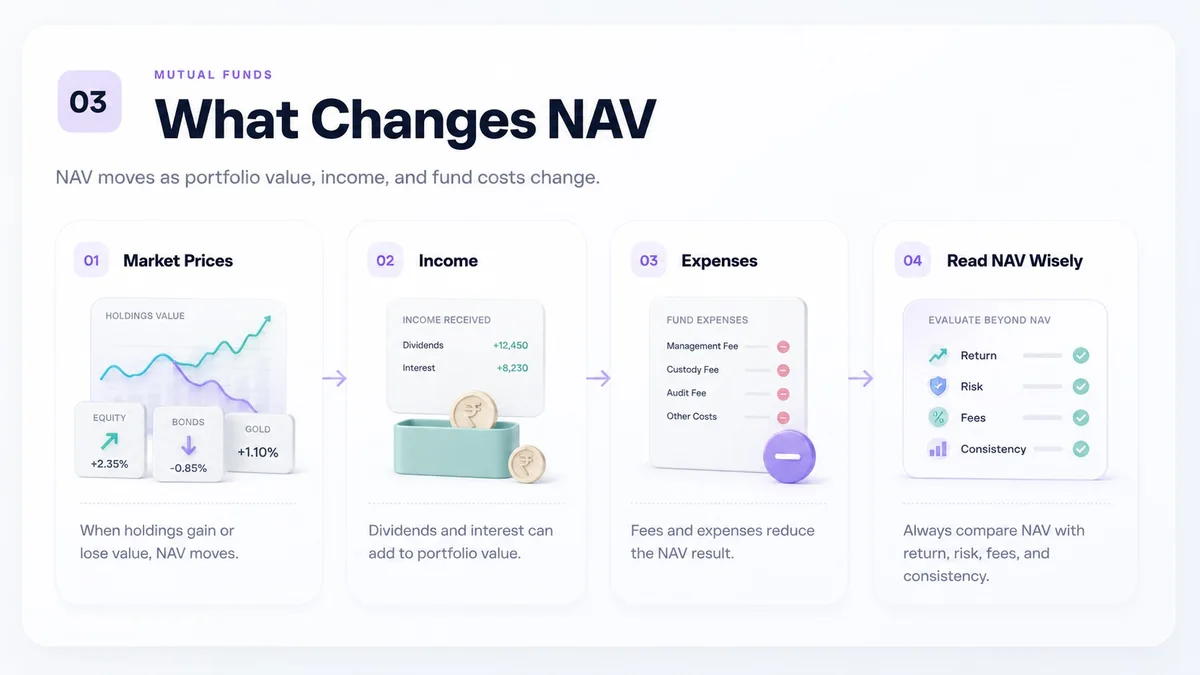
NAV moves when the underlying portfolio changes value, when income is distributed, or when expenses affect the fund. A rising NAV usually reflects stronger portfolio performance over time.

  • Portfolio gains can raise NAV.
  • Distributions may affect the level.
  • Costs also influence the result.
What changes NAV including market prices, income, expenses, and how to read NAV wisely
NAV changes as the portfolio value, income received, and fund expenses all move over time.

How to use it wisely

A higher NAV does not automatically mean a better fund. Investors should look at return history, risk, fees, and consistency, not just the absolute NAV number.

  • Do not compare on NAV alone.
  • Use return history with NAV.
  • Add risk and fee context.

Put it into practice — explore Egyptian mutual funds or ask the AI analyst.

Frequently asked questions

What is NAV (net asset value)?
NAV is the per-unit value of a mutual fund: the total value of everything the fund owns, minus its liabilities, divided by the number of units outstanding. It is the price at which you buy or redeem fund units.
How is a fund’s NAV calculated?
The manager values all the fund’s holdings at current market prices, subtracts fees and other liabilities, then divides by the total units. Most Egyptian funds strike a NAV daily or weekly.
Why does a fund’s NAV change?
NAV moves as the market prices of the fund’s underlying holdings change. If the fund’s stocks and bonds rise in value, the NAV rises; if they fall, it drops. Dividends received and fees charged also affect it.
Is a fund with a lower NAV cheaper?
No. A low NAV does not mean a fund is cheap or a bargain — it only reflects the per-unit price. What matters is the fund’s return, risk and costs, not the absolute NAV number.

Continue learning

All learn topics →