
Beginner Basics · 6 min read
What Is the Stock Market?
Understand how buyers, sellers, exchanges, and listed companies come together in one market.
The stock market is a place where companies raise capital and investors buy ownership in those companies. Prices move as people react to earnings, news, interest rates, and expectations for future growth.
Why the stock market exists
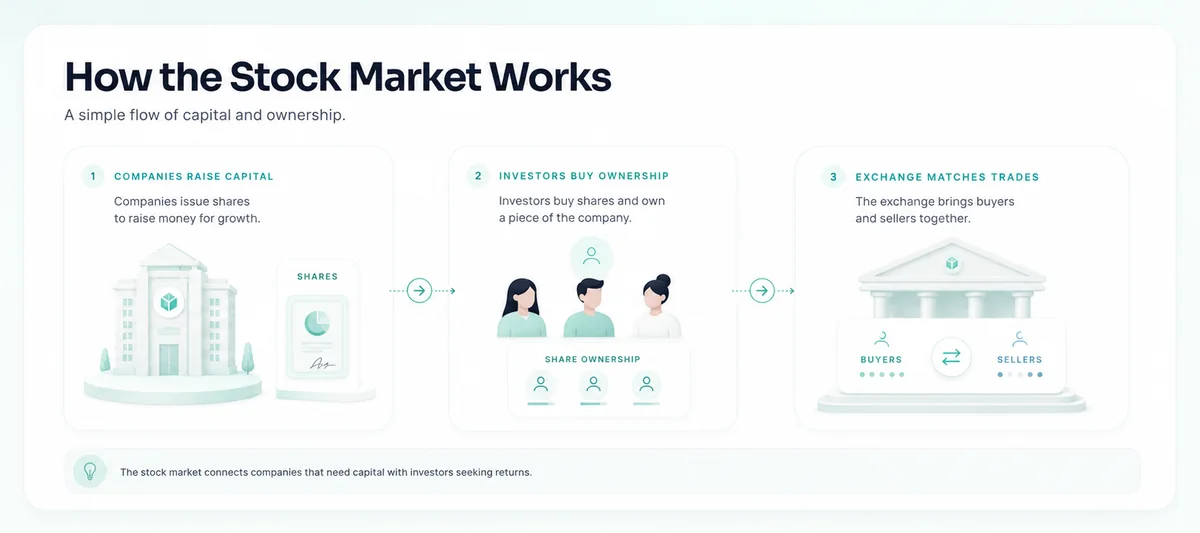
Companies need funding to expand, build products, hire talent, or enter new markets. Listing on an exchange gives them access to investor capital, while investors gain a chance to participate in the company’s future growth.
- Companies sell shares to raise money.
- Investors buy shares to own a piece of the company.
- The exchange makes trading transparent and organized.
Who takes part in the market
Retail investors, institutions, brokers, market makers, analysts, and regulators all influence how the market works. Each participant plays a different role, from executing trades to setting research expectations and monitoring fairness.
- Retail investors trade personal savings.
- Institutions manage larger pools of money.
- Brokers and exchanges handle execution.

What moves prices
Prices move when the balance between buyers and sellers changes. Strong earnings, lower rates, or positive news can push demand higher. Weak guidance, risk-off sentiment, or macro pressure can pull prices lower.
- Results and guidance matter.
- Macro conditions change valuations.
- Sentiment can accelerate moves.
Put it into practice — explore Egyptian mutual funds or compare funds side by side.